


Is your compost ready? Check it simply and effectively!
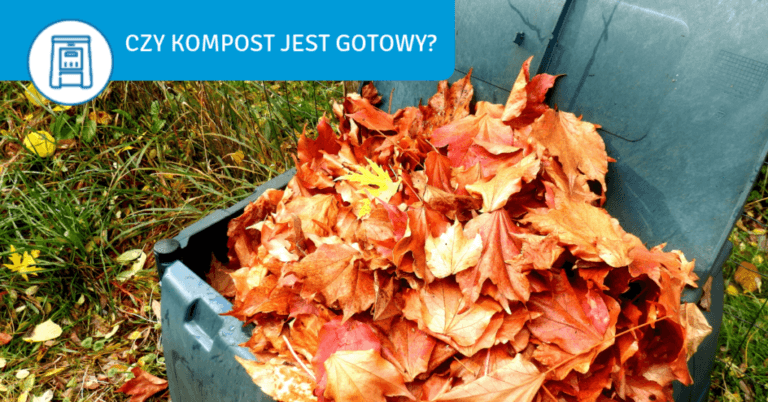
Whether you're just getting started with composting or you've been making your own for a long time, learn how to check if you're making your own fertilizer. you've been preparing your own fertilizer for a long time, learn how to check if your compost is ready. With our tips, you will be sure that Your fertilizer is of good quality.
How does compost affect the soil?
Compost is an all-natural fertilizer that enriches the soil with humus. It is usually formed from plant residues as a result of their aerobic decomposition by microorganisms. Such a process is called composting. We prepare compost in composters or in compost piles.
The humus that compost contains makes the soil looser and richer in nutrients. The substances necessary for plant growth are supplied to them supplied to them gradually, and not all at once, as is the case with the use of mineral fertilizers.
Check out what to make compost from.
When is compost ready?
The maturation process of compost varies and depends on the type of plant scraps used plant residues and the degree to which they are ground. In backyard composters compost is most often processed for up to 12 months.
Compost, which can be used to fertilize the soil in the garden, has a dark color and the texture of the of fresh soil. In finished compost you will no longer find earthworms, which have finished their work in the heap.
How to check if the compost is ready?
There is a simple way to verify that the compost is already prepared for use on the plot.
For the experiment you need:
✅ a sample of compost,
✅ two substrates,
✅ cress seeds,
✅ paper towels,
✅ water.

Step 1:
We wet a paper towel heavily with water. Place it on one of the saucers and spill the cress seeds.
Step 2:
On the second saucer, we first give a sample of compost, then put a wet paper towel and spill the cress seeds.
Step 3:
Store both coasters in the same conditions. Preferably in a warm place.
Step 4:
After one, two and three days, check the germination power of the seeds.
The paper towels must be firmly moist. We can add water to make sure make sure the cress growth environment is moist.
How to read the results of this experiment?
✅ If there are more cress sprouts in the sample with compost and they have longer roots, this is a sign that the compost is of very good quality and supports the growth of the plants.
✅ If the cress sprouts in both saucers are of similar size, then the compost does not adversely affect the growth of plants – it is of good quality.
✅ In the case when there are fewer seeds germinating in the sample with compost and they have a brown or black color, then the compost is toxic. These are signs of plant decay. Such Compost still needs to mature.
If the compost visually resembles soil and smells similar, then its use is safe for your plants.
What is immature compost good for?
As we mentioned, not fully processed compost is toxic to plants, Therefore, we can't use it to fertilize the soil for cultivation. However, can we use such compost on the plot? Yes! It is a good material for mulching trees and shrubs: it forms a protective layer against frost.
Improve the quality of your compost with Biocomposter
Want to make your compost more valuable? Use our Biokomposter biopreparation, which will not only speed up the long-term composting process, but also will enrich the soil with humus. How is this possible? Specially selected microorganisms will eliminate pathogenic bacteria and parasite eggs, and the nutrients in the soil will be more easily absorbed by plants.

Do you like ecological and proven solutions? Like us on Facebook and stay always up to date: